Is the Trump meme coin a scam and what does the Senate fight over it actually prove?
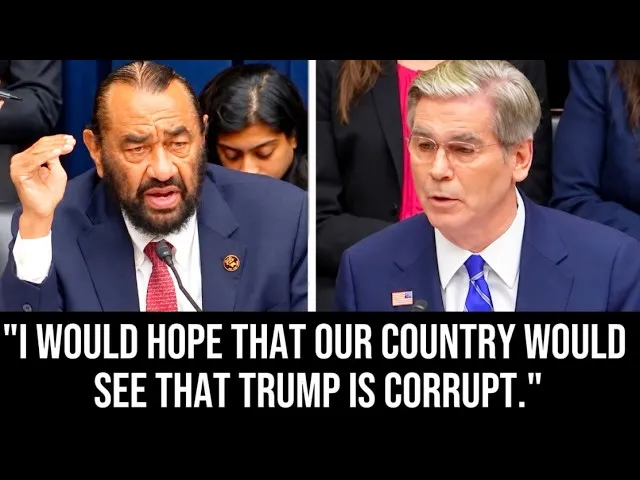
Video: WHOA: Al Green GRILLS Bessent over Trump's meme coin “scam”
Need articles like this for your video? They help promote it on YouTube and Google — order them in the Telegram bot @sat_sit_bot. The bot writes and publishes the articles itself (with your YouTube video embedded) on popular topical websites (no ads). Try it free: 50 articles on us.
Key takeaways
- Senator Al Green pressed Treasury Secretary Scott Bessent over the Trump meme coin and whether it constitutes a scam or a conflict of interest.
- Bessent's defense rested on the claim that meme coins are a well-known, openly traded asset class rather than a hidden scheme.
- Critics argue the token's main value is access and proximity to power, not any underlying product or cash flow.
- Meme coins are among the most speculative crypto assets, with no revenue, no governance rights and liquidity concentrated in a few wallets.
- A sitting president's family-linked token creates a disclosure problem: buyers cannot separate political access from investment risk.
Meme coins are not investments in a business, a product or a revenue stream; they are tokens whose price depends entirely on what the next buyer is willing to pay. That is why the question of whether the Trump meme coin is a scam keeps resurfacing, and why a Senate exchange between Senator Al Green and Treasury Secretary Scott Bessent over the token became a flashpoint: the argument is less about code and more about whether a sitting president's family should profit from a speculative asset sold to the public.
What happened when Al Green grilled Bessent over the meme coin
Senator Al Green used a hearing to force Treasury Secretary Scott Bessent to defend the Trump meme coin directly, framing it as a conflict-of-interest problem rather than a technical one. Bessent's response followed a familiar line: meme coins are an established, openly traded category of crypto asset, buyers know what they are getting, and the Treasury's job is markets and policy, not policing the reputation of a token. Green's counter was that the issue is not the asset class but the seller — a president whose family launched the token while he was in office. The exchange escalated into a back-and-forth over whether the word "scam" applies, and the clip of the confrontation is what drove most of the reaction online.
Why the "it's just a meme coin" defense does not settle the argument
Calling a token a meme coin describes its category, not its risk. A meme coin typically has no cash flow, no governance rights, no claim on assets and no roadmap obligation; its supply schedule and holder distribution are the only fundamentals that matter. That means the defense "everyone knows meme coins are speculative" is true and irrelevant at the same time: the question is whether a public official's family should be the issuer of an asset whose value depends on his political visibility. When the issuer can influence the token's price simply by being in the news, the ordinary disclaimer that "crypto is risky" stops being a sufficient answer.
The real risks for anyone buying a political meme coin
- Concentration. A small number of wallets usually hold a large share of supply, which means a handful of sellers can move the price against everyone else.
- Access as the product. For many buyers the appeal is proximity — dinners, events, insider-adjacent status — not yield. That makes the token a paid membership card with a fluctuating price tag.
- Liquidity risk. Thin order books mean exits get expensive fast; the buyer who arrives last absorbs the loss.
- Disclosure gaps. Buyers cannot see who is selling, when, or how much the issuing family retains.
- Regulatory ambiguity. Enforcement priorities shift with administrations, so the same token can be treated as a commodity, a security or a collectible depending on who is in charge.
The practical lesson is that a meme coin's price chart is a map of sentiment, not of value. Anyone treating a political token as a savings vehicle is confusing visibility with durability.
What viewers and critics keep asking about meme coins
The recurring doubts are consistent. First, whether buying these tokens is a genuine investment or just paying for access — a distinction that matters because access has no resale value once the political cycle ends. Second, whether the scheme is best described as a Ponzi or a pyramid: technically neither, since there is no promised return and no recruitment hierarchy, but the economics still require new buyers to pay earlier ones. Third, how this differs from mainstream crypto — bitcoin has deep liquidity, a decade of institutional infrastructure and no single promoter whose fortunes set the price. Fourth, why buyers keep returning: the same reason lottery tickets sell, which is a small stake against a large, vivid upside. The honest framing is that meme coins are entertainment with a price tag, and entertainment bought on leverage is how retail traders get wiped out.
How to judge a political token before you touch it
Start by asking who benefits from your purchase. Check the holder distribution on-chain, the unlock schedule for insider allocations, and whether the issuing entity has disclosed its own stake. Look at how the token behaved during the last major news cycle involving its promoter — if the price spikes on headlines and bleeds afterward, you are trading attention, not value. Then compare the liquidity to the size of your position: if selling your entire holding would move the price meaningfully, you are the exit liquidity. Finally, treat any token whose main selling point is a person rather than a product as a position you must be able to lose entirely. None of this requires a view on politics; it requires a view on incentives.
What the Senate clash actually signals about crypto oversight
The hearing matters less for what it settled than for what it exposed: lawmakers are now willing to litigate individual tokens on the record, and Treasury officials are being asked to comment on assets connected to the president's family. That pressure will shape how the next round of crypto rules is written, particularly around disclosure for issuers with public roles. For traders, the takeaway is that political risk is now a priced-in variable for a subset of tokens. For the market as a whole, the episode adds to the argument that clear disclosure rules would help legitimate projects by separating them from tokens that exist mainly to monetize a name.
The bottom line
The exchange between Al Green and Scott Bessent did not produce a legal verdict on the Trump meme coin, but it made the core problem impossible to ignore: a speculative token issued by a political family turns every headline into a price signal. Daniel Reed's breakdown of the hearing captures why the confrontation resonated — it is a case study in conflicts of interest dressed up as an asset class. Treat meme coins as high-risk entertainment, check who is selling before you buy, and never let a famous name substitute for a thesis. The buyers who lose least are the ones who assume the last buyer may be them.
Source: WHOA: Al Green GRILLS Bessent over Trump's meme coin “scam” · Markdown version
Questions & answers
Is the Trump meme coin legally a scam?
No court or regulator has ruled the token a scam, and meme coins generally fall outside the definitions used for fraud unless misrepresentation can be proven. The Senate exchange was a political and reputational challenge, not a legal proceeding. What critics point to is the structure: a token with no cash flow whose price depends on the issuer's visibility.
Is a meme coin the same as a Ponzi or pyramid scheme?
Not technically. A Ponzi pays early investors with new money under a promise of returns, and a pyramid pays for recruitment; meme coins promise nothing and have no hierarchy. The resemblance is economic rather than legal: gains for early holders require later buyers to pay more, and the last buyers absorb the loss.
Why do people keep buying political tokens if the risks are so obvious?
Two reasons dominate: access and upside. Some buyers want proximity to power — events, insider-adjacent status — and treat the token as a paid membership. Others treat a small stake as a lottery ticket with a vivid story attached. Both are entertainment purchases, and both become dangerous when sized like investments.
What should I check before buying any meme coin?
Look at holder concentration, insider allocations and unlock schedules, and compare liquidity to your position size. Watch how the token reacted to the last news cycle involving its promoter: spikes on headlines followed by slow bleed mean you are trading attention. If you could not sell your full holding without moving the price, you are the exit liquidity.